Because of the difficulty level, most players should avoid trying to complete the entire level immediately. Learning small sections first is the most effective way to improve.
The Practice Mode allows you to place checkpoints and repeat difficult parts without restarting from the beginning. This helps you understand obstacle patterns, memorize transitions, and gradually improve your consistency.
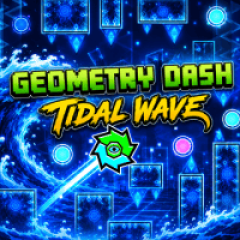
One of the most noticeable features of Geometry Dash Tidal Wave is its extremely fast pace. The level uses the maximum game speed, reaching the x4 speed mode for most sections.
This creates a completely different experience compared to normal Geometry Dash levels. Players have much less time to react, meaning every jump, movement, and direction change must be performed almost automatically.
The high speed also increases the importance of memorization. Instead of reacting at the last second, experienced players need to already know what obstacle is coming next.
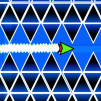
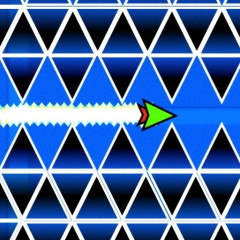
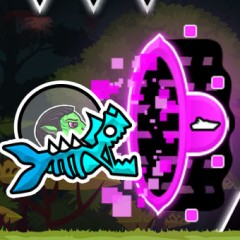
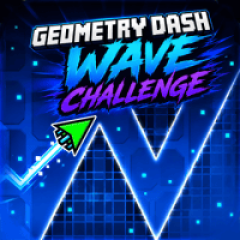
The Wave gameplay is considered one of the hardest parts of Geometry Dash Tidal Wave. The triangular wave icon moves through extremely narrow paths where even a tiny mistake can cause a collision.
These sections require:
Unlike easier wave sections in other levels, the wave corridors in this level leave very little space for correction. Players often need hundreds or thousands of attempts to build the muscle memory required for completion.
Another major challenge comes from the level design. Throughout the map, players encounter frequent gravity changes that suddenly switch the direction of movement.
These transitions can quickly change how your icon moves and require immediate adjustment. In addition, some sections include invisible or partially hidden obstacles that make the level even harder to read.
Because of these mechanics, success depends not only on reflexes but also on remembering the exact position of every hazard.
The combination of speed, difficult wave control, and unpredictable obstacles makes Geometry Dash Tidal Wave one of the most demanding experiences available for skilled players.
For new players, jumping directly into the normal run of Geometry Dash Tidal Wave is usually not the best approach. The level is designed for experienced players, and many beginners will fail within the first few seconds because of the extremely fast opening sections.
Instead of trying to complete the entire level from the start, focus on understanding the basic movement patterns first. Learning each section separately will help you build confidence and avoid wasting attempts.
The goal is not to finish the level quickly but to gradually improve your control, timing, and consistency.
Practice Mode is one of the most important tools when playing Geometry Dash Tidal Wave. It allows players to place checkpoints and restart from difficult areas instead of returning to the beginning after every mistake.
Using checkpoints effectively helps you:
A good strategy is to divide the level into small sections. Master one part before moving to the next. Once you can complete each section consistently, connecting them together becomes much easier.
For players who enjoy challenging Geometry Dash experiences with varied mechanics and visual styles, exploring other custom levels, such as Geometry Dash Breeze 3D, can also help improve your overall control skills and offer a different type of gameplay challenge.
The difficulty of Geometry Dash Tidal Wave comes from requiring extremely precise movements. Many obstacles cannot be passed through reaction alone because the speed is too high.
Repeated practice helps your hands remember the correct timing automatically. After enough attempts, movements that initially feel impossible will become more natural.
Instead of focusing only on completing the level, focus on improving one mistake at a time. Small improvements will eventually lead to successful runs.