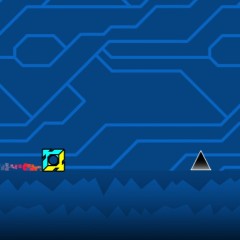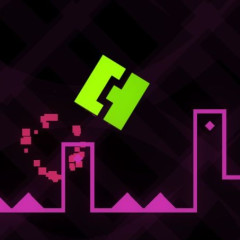
Every Demon level contains multiple gameplay styles, including cube, ship, wave, UFO, robot, spider, and ball sections. Each mode has different physics, so successful players learn how every transformation behaves before trying a full completion.
Rather than rushing through a level, focus on understanding one segment at a time. Once each section feels comfortable, connecting them becomes much easier.
Practice Mode is one of the strongest learning tools in Geometry Dash Demons. Strategic checkpoint placement lets you isolate difficult transitions without restarting constantly.
A useful habit is placing checkpoints before portals, tight corridors, or fast-speed changes. After clearing these sections consistently, reduce the number of checkpoints until you're ready for Normal Mode.
The short answer is yes.
Demon levels represent the greatest difficulty category in Geometry Dash. They are designed for experienced players who already understand the game's mechanics and timing.
Unlike Easy, Normal, Hard, or Insane levels, Demon stages combine multiple challenges into a single run:
Because of this, even players who easily complete regular levels may struggle when entering Demon content.
Not every Demon level offers the same experience. The community generally divides them into several categories based on difficulty.
Easy Demon levels introduce players to advanced gameplay without becoming overwhelming. They still require concentration but leave room for learning.
These levels demand stronger consistency. Players must react faster while handling trickier patterns and more precise timing.
Hard Demon stages begin testing great technical skill. Long wave tunnels, memory sequences, and rapid transformations become common.
Insane Demons push nearly every mechanic to its limit. Only experienced players usually manage to complete these consistently.
Extreme Demons are considered some of the hardest levels ever created. They often require thousands - or even tens of thousands - of attempts before completion.
This progression allows players to improve naturally rather than jumping directly into impossible challenges.
Every player encounters obstacles while progressing through Geometry Dash Demons. Fortunately, each challenge has practical solutions.
Many jumps require perfect precision. Clicking even a fraction of a second too early or too late results in failure.
Instead of reacting visually, begin listening to the music. Geometry Dash is built around rhythm, and many jumps align naturally with the soundtrack. Over time, you'll develop consistent timing without consciously counting every click.
Wave gameplay is one of the biggest barriers for new Demon players.
Small tunnels, spikes, and sudden direction changes leave almost no room for error.
Practice only the wave portions repeatedly.
Avoid trying to finish the whole level every attempt. Building confidence in one difficult section saves far more time than constantly restarting from the beginning.
Some Demon levels intentionally hide the correct route or force players to memorize invisible paths.
The first few attempts often feel confusing because nothing appears predictable.
Accept that memory sections are designed for repetition.
Watch where you fail, memorize one obstacle at a time, and slowly build a mental map. After enough practice, these areas become surprisingly consistent.
Many Demon levels suddenly accelerate from normal speed into extremely fast gameplay.
Players often panic because they haven't adjusted their clicking rhythm.
Prepare mentally before entering speed portals.
Instead of reacting after the acceleration, anticipate it. Knowing the speed change is coming allows your hands to stay relaxed rather than rushed.
Long Demon levels can last several minutes, and maintaining concentration becomes increasingly difficult.
Many players fail near the end simply because they become nervous.
Treat every section as a separate challenge instead of thinking about the finish line.
Focusing only on the next obstacle reduces pressure and helps maintain consistency throughout the run.
Some beginners believe using Practice Mode somehow makes progress less impressive.
In reality, nearly every skilled Geometry Dash player spends significant time practicing before attempting a full completion.
Practice Mode allows you to:
Learn difficult patterns safely.
Memorize hidden routes.
Improve wave control.
Master portal transitions.
Build confidence before Normal Mode.
Using checkpoints effectively often reduces frustration while dramatically increasing improvement speed.
Improving in Geometry Dash Demons isn't only about faster reactions.
Several important skills develop naturally through consistent practice.
Experienced players quickly recognize familiar obstacle combinations.
Instead of seeing individual spikes, they identify complete movement patterns and react automatically.
Music plays an important role in Geometry Dash.
Learning to synchronize your clicks with the soundtrack creates smoother gameplay and more reliable timing.
Many players can complete difficult sections once.
The real challenge is repeating those sections dozens of times without making mistakes.
Consistency separates successful Demon players from beginners.
Every failed attempt teaches something valuable.
Progress in Demon levels often happens gradually rather than all at once. Remaining patient is one of the most important skills you can develop.
After conquering several Demon levels, trying different official and community-inspired experiences can strengthen your overall gameplay. One excellent choice is Geometry Dash Daily Level: Dream World, which introduces fresh layouts, creative obstacle designs, and new rhythm challenges while keeping the classic gameplay intact. Spending time with varied level styles helps improve adaptability, making future Demon completions feel much more manageable.